Robotics can narrow education gaps, but access decides the result
A classroom robot can give students another way to learn, practise, and ask for help. It cannot fix a shortage of teachers, poor internet access, or a school that cannot maintain the equipment.
- Robots can give repeated practice without using teacher time
- Physical machines can make coding and engineering easier to see
- Cost, training, repairs, and access decide who benefits
Where robots can help
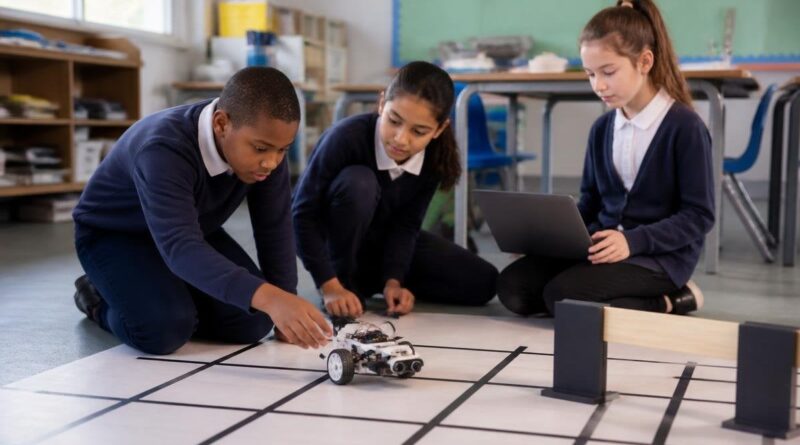
Robotics works best when the task needs action. A student can write code, send a robot across a marked area, read its sensors, and change the program after seeing the result. That loop makes an abstract idea visible.
The same approach can support lessons in maths, science, design, and computing. A robot does not need to be advanced. A small mobile platform can teach distance, speed, direction, and basic control. A robotic arm can show how joints, torque, and movement limits affect a task.
Repeated practice is another useful role. A learning robot can run the same exercise many times, while a teacher watches for errors and helps with the part the robot cannot explain. This gives students more time with the task, not a replacement for the person teaching it.
The gap starts before the lesson
A school needs more than a robot in a box. It needs safe room for use, a computer or tablet, charging, software, spare parts, and someone who can fix faults.
Each missing piece reduces the number of students who can work with the machine. Teacher preparation matters just as much.
A robot lesson can become a short demonstration if the teacher has no time to test the software or plan work for different skill levels. Students with prior access to coding may then move ahead while others spend the lesson learning how to connect the hardware.
The price also changes the result. Buying one robot may give a small group a rich session while most students watch. Several low-cost machines may allow more hands-on work, but they can bring more charging, storage, and repair needs.
What the robot cannot do
Robots can give feedback based on programmed rules or sensor readings. They cannot read every reason behind a wrong answer, notice a student losing confidence, or adapt a lesson with the judgment of a teacher.
That limit matters for students who need language help, extra time, or a different way to approach the task. A machine can repeat an instruction. A teacher can change the explanation, spot confusion, and connect the lesson to the student’s prior knowledge.
Remote or social robots raise further questions. A school needs clear rules for cameras, recorded data, student accounts, and access by outside services. The device should collect only the information the lesson needs, and staff should know where that information goes.
Schools need evidence about the lesson, not polished clips. Robot24.com education robotics reporting can connect a classroom robot’s task, cost, and limits to reported tests, giving staff a firmer starting point for the test below.
A better test for schools
The useful question is not whether a robot looks advanced. Ask what students will do with it, how often they will use it, and what the teacher will gain from having it in the room.
I’d fund a small classroom trial before a large purchase. The trial should measure student work and teacher time, then record faults and repair delays. A working demo proves that the robot can perform a task; it does not prove that the task improves learning.
Use this checklist before buying:
- Name the lesson: Write the exact skill students will practise and the work they will submit.
- Count the users: Set a group size and calculate how long each student gets with the machine.
- Check the support: Confirm who handles software updates, broken parts, charging, and storage.
- Plan for access: Include students who need extra time, another language, or a non-visual way to follow the task.
- Protect student data: List every sensor, account, recording, and outside service involved.
- Set a review date: Compare the trial with the current lesson before ordering more units.
What happens next
Robotics can narrow an education gap when it gives more students useful practice and leaves teachers with time for human work. Schools should start with one clear lesson, a measured trial, and a repair plan. The next decision should follow the evidence from that room, not the robot’s appearance in a demonstration.